Are all cryptocurrencies based on blockchain
Governance tokens are designed to give holders a say in how a decentralised project or protocol is managed. By owning these tokens, you can vote on proposals, suggest upgrades, or decide how funds should be allocated basics of baccarat. They support decentralised decision-making and ensure that control remains with the community rather than a central authority.
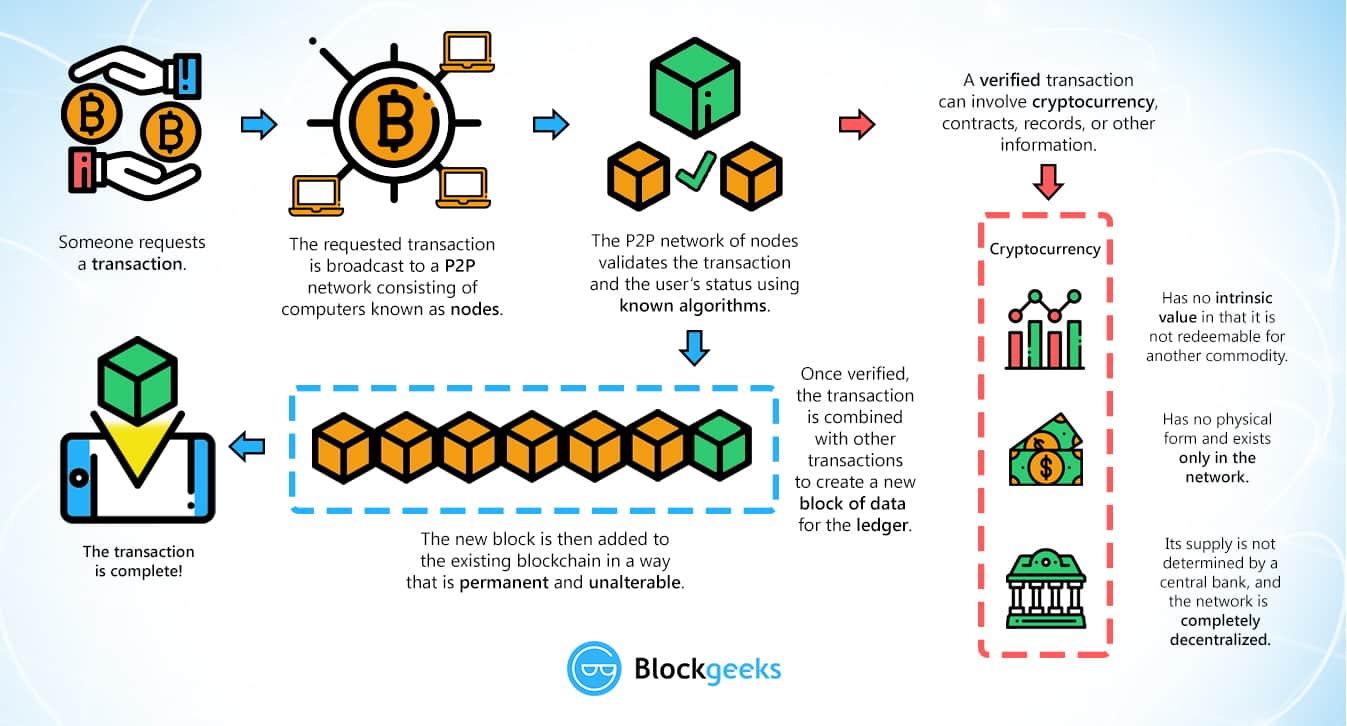
When new data is added to the network, the majority of nodes must verify and confirm the legitimacy of the new data based on permissions or economic incentives, also known as consensus mechanisms. When a consensus is reached, a new block is created and attached to the chain. All nodes are then updated to reflect the blockchain ledger.
The NFT market is extremely volatile: in 2021, one NFT created by the digital artist Mike Winkelmann, also known as Beeple, was sold at Christie’s for $69.3 million. But NFT sales have shrunk dramatically since summer 2022. As of 2023, according to a report from crypto analysis firm dappGambl, 95 percent of NFTs are worth practically nothing.
Do all cryptocurrencies use blockchain
This decentralized approach ensures that no single party can manipulate the system. It also makes blockchain inherently resistant to hacking, as changing one part of the blockchain would require altering the entire chain, which would be practically impossible.
The Bitcoin protocol is built on a blockchain. In a research paper introducing the digital currency, Bitcoin’s pseudonymous creator, Satoshi Nakamoto, referred to it as “a new electronic cash system that’s fully peer-to-peer, with no trusted third party.”
Byteball, another DAG-based network, relies on 12 so-called witness nodes that operate a main chain. These witness nodes are controlled by the developer to check the state of the DAG. While IOTA and Byteball claim their solutions are temporary, they’re problematic in terms of centralization, since both of them are, in a sense, operated by a central authority.
Bitcoin was the first cryptocurrency to see the light of day, back in 2009. But it wasn’t the cryptocurrency alone that prompted such international interest. Many believe that the more important novelty was Bitcoin’s underlying blockchain technology. Introducing decentralized peer-to-peer blockchains, the technology took the world by storm. For a few years, blockchain ledgers were the defining characteristic of any cryptocurrency. But that all changed with the official launch of IOTA.
You might be familiar with spreadsheets or databases. A blockchain is somewhat similar because it is a database where information is entered and stored. The key difference between a traditional database or spreadsheet and a blockchain is how the data is structured and accessed.
Are all cryptocurrencies mined
The amount of crypto in a block reward varies from one blockchain to another. For example, on the Bitcoin blockchain, miners can get 3.125 BTC in block reward as of December 2024. Due to Bitcoin’s halving mechanism, the amount of BTC in a block reward decreases by half every 210,000 blocks (approximately every four years).
New bitcoins are added to the Bitcoin supply approximately every 10 minutes, which is the average amount of time that it takes to create a new block on the Bitcoin blockchain. By design, the number of bitcoins minted per block is reduced by 50% after every 210,000 blocks, or about once every four years.
Proof of Stake rose to popularity as an eco-friendly alternative to Proof of Work that offers higher transaction speeds. However, some critics say that Proof of Stake leads to centralization — as investors who own and stake a large proportion of the cryptocurrency will earn more rewards.
Given the substantially lower costs associated with proof-of-stake, you might think it’s a better way to validate transactions. It does, however, still have downsides. For example, even though there’s no concern that an entity can gain control over 51% of a network’s computing power with proof-of-stake, if an entity could gain control of 51% of all outstanding tokens it could hold the network and its stakeholders hostage. Of course, there’s not much likelihood this will happen with high-market-cap digital currencies. However, virtual currencies with low market caps may be susceptible to this vulnerability.
Advertise Here

Social Media